
Rethinking the Autumn Hedge Cut
September arrives and, across the countryside, the hedge cutters come out. A Defra survey found that 57% of farmers cut hedges alongside arable fields in September or October, compared with just 18% in January or February. There are good practical reasons for this: harvest is finishing, the ground is usually still relatively dry, and machinery can get around fields without the damage and soil compaction it might cause in midwinter. On arable farms, hedge cutting also has to fit around cultivation and drilling. But where the farming calendar and ground conditions give us more flexibility, there are good ecological reasons to wait.
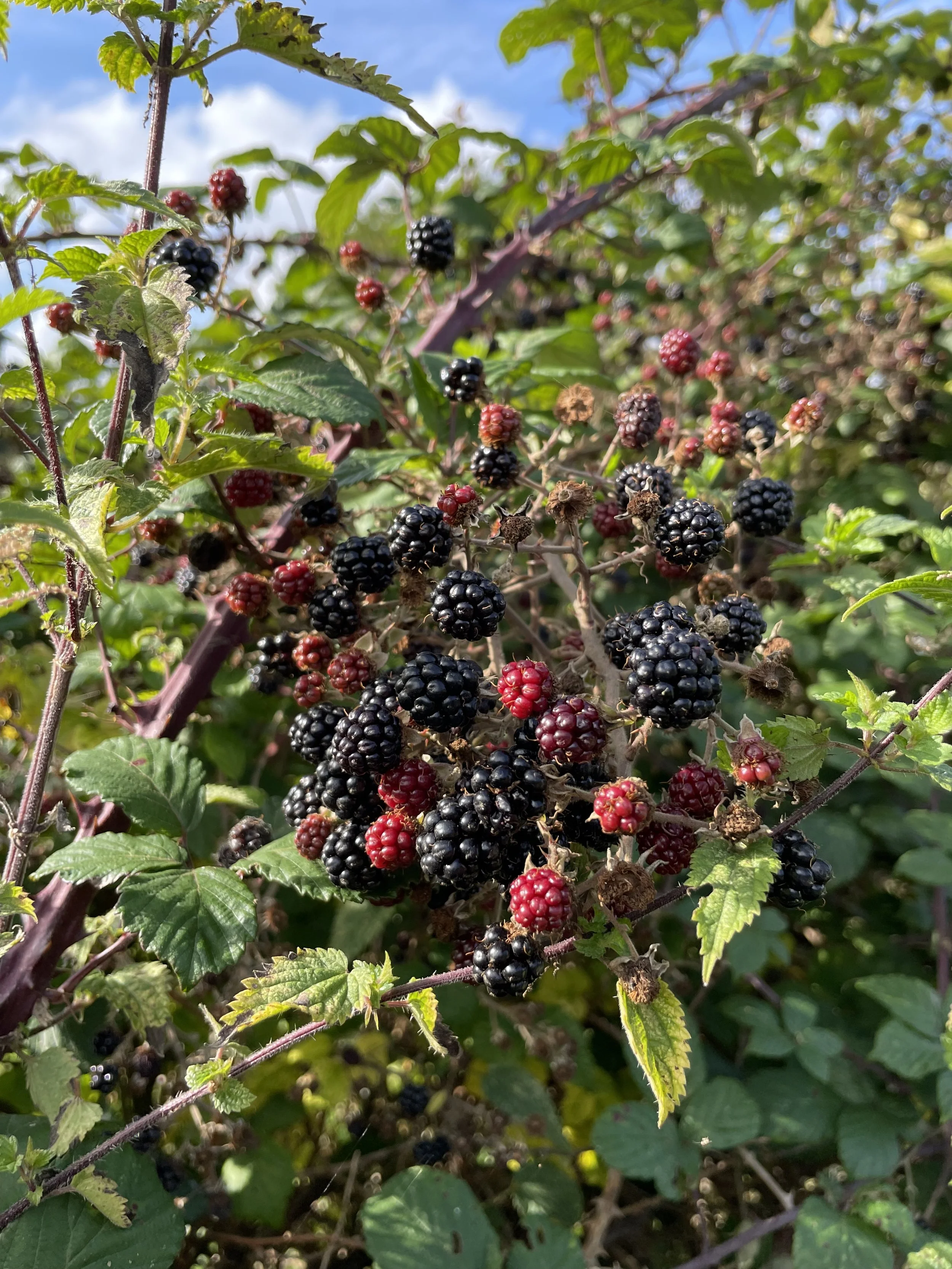
Look closely at a hedgerow in autumn and the reason is obvious. Hawthorn is covered in haws, blackthorn in sloes, while roses, brambles and other shrubs are also producing fruit. These provide an important food source for birds and small mammals through autumn and winter. Cutting in September removes much of this crop before wildlife has had the chance to use it. Leaving cutting until January or February allows most of the autumn and winter fruit crop to remain available.
There is an equally good case for not cutting every year. Current Defra guidance recommends cutting established hedges on a two- or three-year rotation, rather than annually. The evidence behind this comes from a five-year UK experiment on hawthorn hedges which found that cutting once every three years, rather than annually, produced 2.1 times as many flowers and 3.4 times the mass of berries. Even moving from a two-year to a three-year cycle was estimated to increase the winter berry crop by about 40%. Across the experiment, cutting reduced flower numbers by as much as 75% and winter berry mass by as much as 83% compared with uncut hedges.
Those are surprisingly large effects for a fairly small change in management. More flowers mean more food for bees, hoverflies and other insects; more fruit means more food for birds and mammals when other food becomes scarce. Leaving some hedges untouched each year also creates a mixture of hedge ages and structures across the landscape, which increases habitat diversity.
So at Sutton Mead we're moving towards a simple approach: cut later and cut less. Most established hedges will be managed on roughly a three-year rotation, with perhaps a third cut in January or February each year. Sections that need cutting for road safety or access will still be dealt with when necessary. It won't be the right approach for every farm or every hedge, but where ground conditions and farming operations allow it, the evidence for giving hedges a longer autumn and a longer interval between cuts is remarkably strong.
Sources
Defra – Hedgerow Management Survey (BD2117) — national survey of hedge-cutting practices and timing. Hedgerow Management Survey
Staley et al. (2012), Biological Conservation — experimental study of how cutting frequency and timing affect hedgerow flowers and berries. Research paper
Defra – CHRW2: Manage hedgerows — current guidance on rotational management of established hedges. Defra guidance