
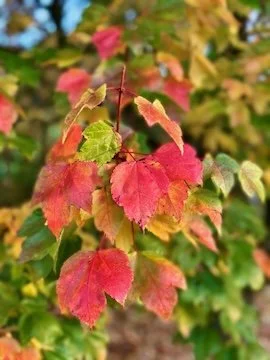
Every autumn, as the leaves begin to fall, gardeners across the country get to work with rakes, leaf blowers and mowers. There are perfectly good reasons for clearing leaves. They can make paths slippery, smother lawns and clog drains. But in our enthusiasm to tidy up, we may be removing something rather more valuable than we realise.
Fallen leaves are an important part of the natural cycle. They provide shelter for insects and other invertebrates, protect the soil from temperature extremes, and gradually decompose, returning nutrients and organic matter to the ground. And increasingly, research is showing just how much wildlife – and perhaps even we ourselves – may benefit from this apparently unremarkable layer of dead vegetation.
A 2025 experiment compared gardens where autumn leaves were removed with those where they were left in place. The results were striking. Leaving leaves in place resulted in 20% more insects and other arthropods emerging the following spring, including a 67% increase in species diversity, and 82% more moths and butterflies, compared with areas where leaves were removed.
Many insects spend the winter as eggs, larvae, pupae or adults among fallen leaves. Clearing them away can remove the insects themselves, along with the habitat they need to survive.
The benefits extend below ground. Fallen leaves provide food for the extraordinary diversity of organisms involved in decomposition. A study of urban gardens in Zurich recorded more than 81,000 soil invertebrates belonging to 120 species, finding that greater soil-fauna diversity was associated with leaf-litter decomposition. Earthworms, woodlice, millipedes, fungi and bacteria all contribute to breaking down fallen vegetation, recycling nutrients and helping maintain healthy soils. Removing leaves removes some of the organic material on which this system depends.
But perhaps the most surprising findings concern our own health.
In a 2026 Finnish experiment, researchers explored whether making ordinary domestic gardens more natural could influence the human microbiome – the communities of microorganisms that live on and inside our bodies. They introduced more vegetation, microbially rich soil and deadwood into 21 gardens, while encouraging residents to stop raking up fallen leaves and allow them to decompose naturally. Another 15 gardens served as controls.
After just three months, researchers found changes in residents' skin and oral microbiomes, alongside changes in markers associated with immune regulation. In particular, the more natural gardens appeared to help residents maintain a more diverse community of microbes on their skin. The findings suggest that exposure to the microbial diversity of natural environments, including those where fallen leaves are left to decay, may help support a healthier immune system.
It provides intriguing evidence for a broader idea: the biological diversity of the places where we live, may influence the biological diversity within us.
So perhaps it's worth reconsidering our annual enthusiasm for clearing away fallen leaves. There are places where they need to be removed, but plenty of others where they can simply be left to decompose – even if it means sacrificing a little of our lawns! The evidence that this benefits wildlife is already compelling. And if the emerging research into human health proves correct, leaving a few more leaves in the garden might turn out to be good for us, too.
Sources
2025 – Science of the Total Environment. Experimental study of autumn leaf removal and spring emergence of overwintering insects. https://doi.org/10.1016/j.scitotenv.2025.178821
2019 – Science of the Total Environment. Study of soil fauna, plant diversity and leaf-litter decomposition in urban gardens. https://doi.org/10.1016/j.scitotenv.2018.12.235
Roslund et al. (2026) – Microbiome. Neighborhood deadwood and yard rewilding modulate commensal microbiomes and inflammatory signals among urbanites. https://doi.org/10.1186/s40168-026-02413-w