
Biodiversity Net Gain
Sutton Mead is developing a Biodiversity Net Gain (BNG) habitat bank through the long-term creation, enhancement, and management of a range of priority habitats, including mixed woodland, floodplain wetland mosaic, other neutral grassland, mixed scrub, traditional orchard, species-rich hedgerows, ponds, and individual trees.
The site lies within two overlapping BNG geography areas: Wiltshire Local Planning Authority and the Blackmore Vale and Vale of Wardour National Character Area. This allows Sutton Mead biodiversity units to be used on a 1:1 basis for developments located within either area, providing greater flexibility for local development projects.
What is Biodiversity Net Gain?
Biodiversity Net Gain (BNG) is a requirement introduced through the Environment Act 2021 that requires most new housing and infrastructure developments in England to deliver at least a 10% measurable increase in biodiversity.
The biodiversity value of a development site is assessed using the statutory Biodiversity Metric. Where sufficient biodiversity gains cannot be delivered on-site, developers can secure off-site biodiversity units from landowners undertaking habitat creation and enhancement elsewhere.
At Sutton Mead, income generated through the sale of BNG units helps fund the long-term restoration and management of the land. This includes habitat creation, ecological monitoring, conservation grazing, woodland management, wetland restoration, and the ongoing management required to maintain the habitats throughout the lifetime of the BNG agreement.
Why Sutton Mead?
Sutton Mead combines a nationally significant ecological setting with professionally planned habitat creation and long-term owner-led management. Together, these characteristics make it well suited to developers seeking high-quality Biodiversity Net Gain units in Wiltshire and the surrounding area.
A Nationally Significant Setting
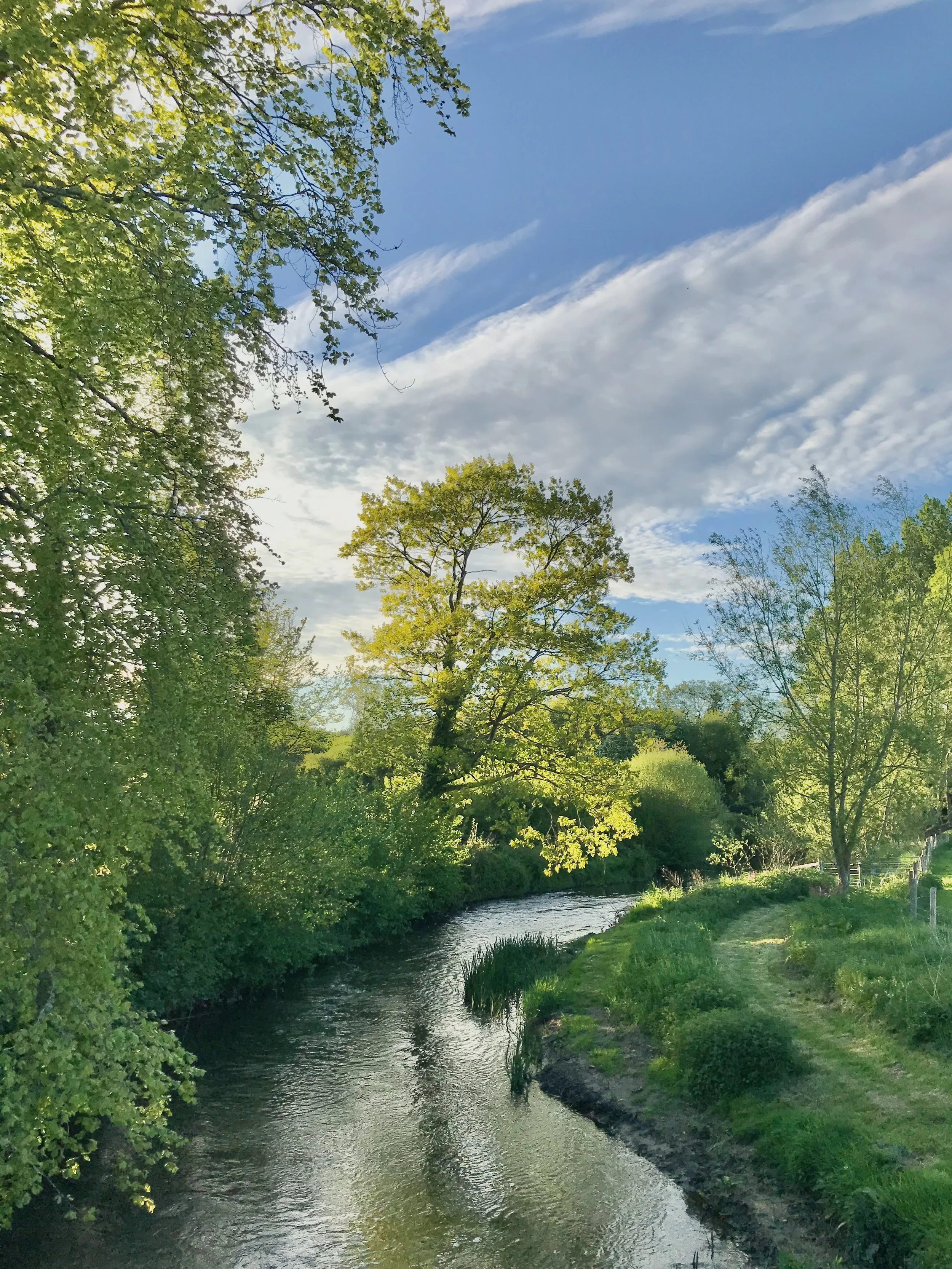
Sutton Mead lies within the Cranborne Chase National Landscape and one of southern England's most important chalk river catchments. The River Nadder flows through the site and forms part of a Site of Special Scientific Interest (SSSI) and Special Area of Conservation (SAC), placing the habitat bank within a nationally significant ecological network.
The close relationship between river, floodplain wetland, woodland, grassland, and pasture creates the opportunity to restore habitats that function as part of a connected ecological system rather than as isolated habitat parcels.
Strategic Location
The site lies within two overlapping BNG geography areas: Wiltshire Local Planning Authority and the Blackmore Vale and Vale of Wardour National Character Area. This allows Sutton Mead biodiversity units to be used on a 1:1 basis for developments located within either area.
Part of the site is also identified within the Wiltshire Local Nature Recovery Strategy as being of high strategic significance for nature recovery, further strengthening the strategic value of the habitats being created.
Integrated Habitat Design
The habitat bank has been designed to create a connected mosaic of woodland, floodplain wetland, species-rich grassland, scrub, hedgerows, ponds, orchards, and individual trees. Managing these habitats as a single ecological system is intended to improve their long-term condition, resilience, and ecological function throughout the lifetime of the BNG agreement.
Long-Term Stewardship
Sutton Mead is managed by Eeva Kuisma and Nick Radford, who live on site and lead the long-term restoration of the land. Habitat creation, monitoring, grazing management, woodland management, and wetland management will all be undertaken as part of the site's ongoing stewardship.
The BNG programme is being developed in partnership with Bidwells, providing specialist ecological, planning, and habitat management expertise alongside long-term owner-led management.
Current Status
Sutton Mead’s BNG programme is being developed in partnership with Bidwells, providing developers with the assurance of a professionally designed habitat creation project.
Baseline ecological surveys have been completed and the Habitat Management and Monitoring Plan (HMMP) is currently being prepared.
Further information on habitat availability, unit numbers, legal agreements, monitoring arrangements, and timelines will be published on this website as the project develops.